A merchant knows where a checkout journey ends, but the number alone may not explain what happened. A customer might be comparing delivery options, trying to understand a charge or looking for a payment method. A specialist research studio could help a product team turn that uncertainty into a question it can investigate. CheckoutLab.com offers a focused identity for a founder whose business is careful observation of the purchase experience.
The first buyer could be a commerce product manager preparing a checkout change. This person needs a clear research question, an achievable study and evidence that can be discussed with designers and developers. The first offer should meet that need directly. A defined study of one purchase journey is easier to commission than an open-ended promise to optimize an entire store.
Sell a decision the study can inform
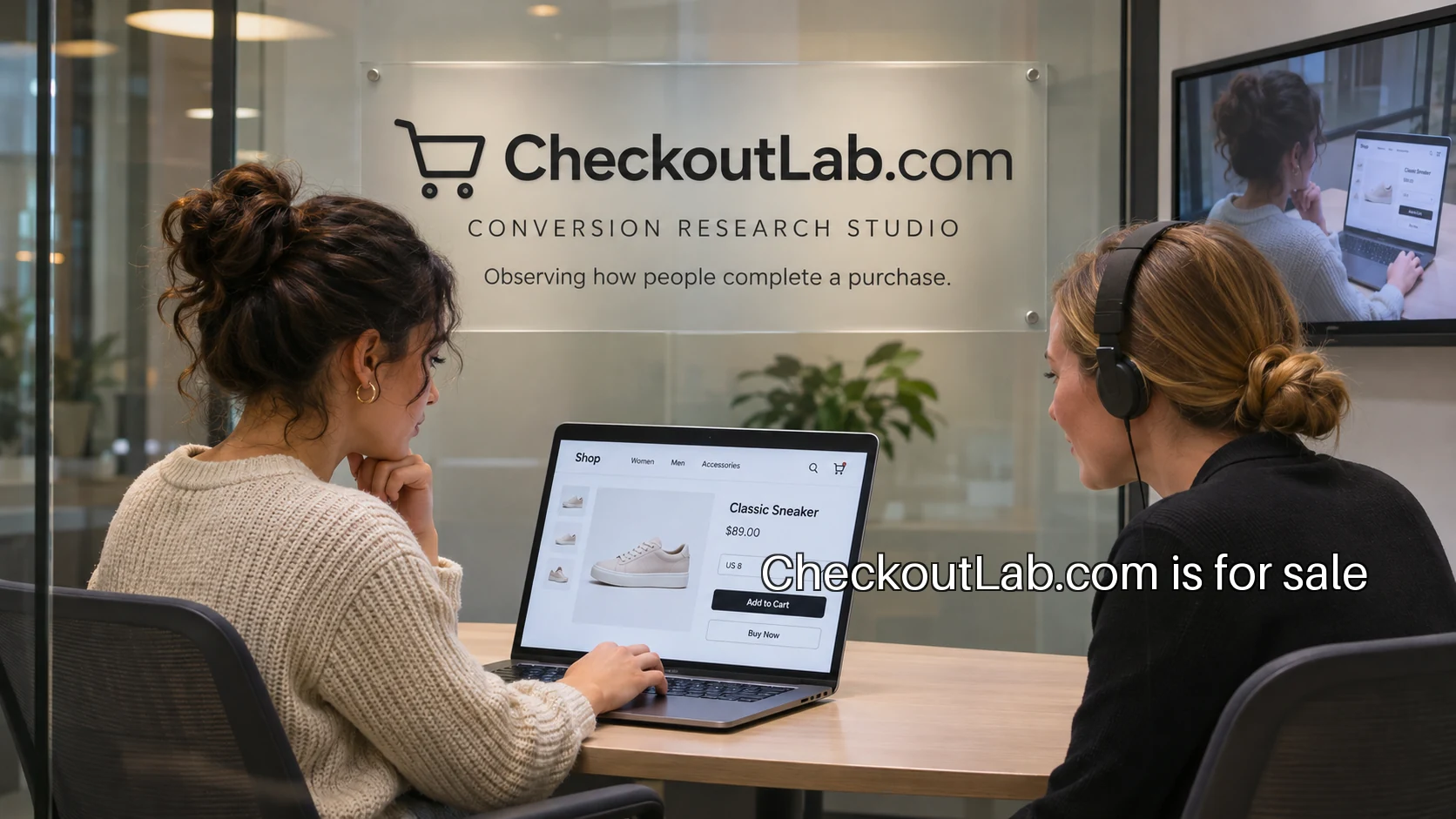
A useful engagement might ask whether people understand the available delivery choices before they reach payment. The studio would agree on the audience, recruit appropriate participants, prepare a realistic shopping task and observe the journey. The deliverable would describe what participants did, what they said and which parts of the interface deserve another look. The client could then decide which change to prototype.
That structure leaves room for different methods without treating them as interchangeable. Interviews can explore how someone explains a decision. Moderated tasks can reveal how they move through a particular interface. Existing analytics can help identify the stage worth investigating. The proposal should explain why the selected method suits the question and what evidence the team will receive at the end.
W3C's guidance on involving users is a useful resource when planning research that includes people with disabilities. It can inform recruitment and study design alongside the studio's wider research process. A founder could build accessibility into the participant plan from the beginning, rather than waiting until a client asks about a problem after launch.
A concrete first engagement
Consider an illustrative shop selling items with several delivery schedules. The product team is considering a shorter delivery selector. A small study could give participants a task with a real timing constraint, then observe how they compare the options. The researcher records the point at which each participant finds the date, asks a question or changes their choice. The report keeps the sequence visible instead of flattening everything into a single score.
The resulting workshop could use a few carefully chosen clips, a timeline of the journey and a list of unresolved questions. One observation might point toward clearer date wording. Another might show that the information arrived too late. Those are different design problems. A strong research report gives the team enough context to distinguish them and choose a next experiment.
Keep observation and interpretation separate
The studio's reporting template would be part of its product. Each finding should link an observation to the task and interface version where it occurred. The interpretation follows, with a practical suggestion for further investigation. A reader should be able to tell the difference between something seen in the session and a researcher's proposed explanation.
This discipline also helps when checkout forms are involved. W3C's form-label guidance explains how labels help identify controls. A studio could use such guidance to prepare a review checklist, then compare that review with what participants actually encounter. The checklist and the study answer related questions, but the report should preserve the evidence from each rather than merging them into one broad verdict.
Find clients through a useful question
A plausible distribution path is publishing short, well-documented research notes about one recurring checkout decision. A note could compare ways of presenting delivery timing, explain the question each design raises and show how the studio would investigate it. That demonstrates the shape of the work without publishing a client's private sessions or presenting an invented outcome.
Partnerships with design agencies could also be valuable. An agency may need specialist research before it finalizes a checkout redesign. The studio could offer a defined study that fits into that project, with clear dates for recruitment, sessions, analysis and a decision workshop. The founder would need a repeatable handoff so the agency can turn research evidence into design work without losing the original context.
Build the practice behind the name
Execution would require recruitment, participant scheduling, secure recording storage, consent procedures and a consistent analysis method. The founder would also need clear agreements about who can view recordings and how long they remain available. Those operational choices shape the service just as much as the report design. A reliable practice gives each client a clear account of what will happen before the first session begins.
The initial milestone could be one completed study that helps a team choose its next prototype. Review the usefulness of the evidence with the client: which finding changed the discussion, which question remains open and which part of the report was hard to use. CheckoutLab.com could carry a focused practice through those early improvements and into a wider collection of research services.
To discuss the name, tell PremiumBrands.com about the audience you want to serve and the first research offer you intend to make. The inquiry form supports purchase and partnership conversations.