
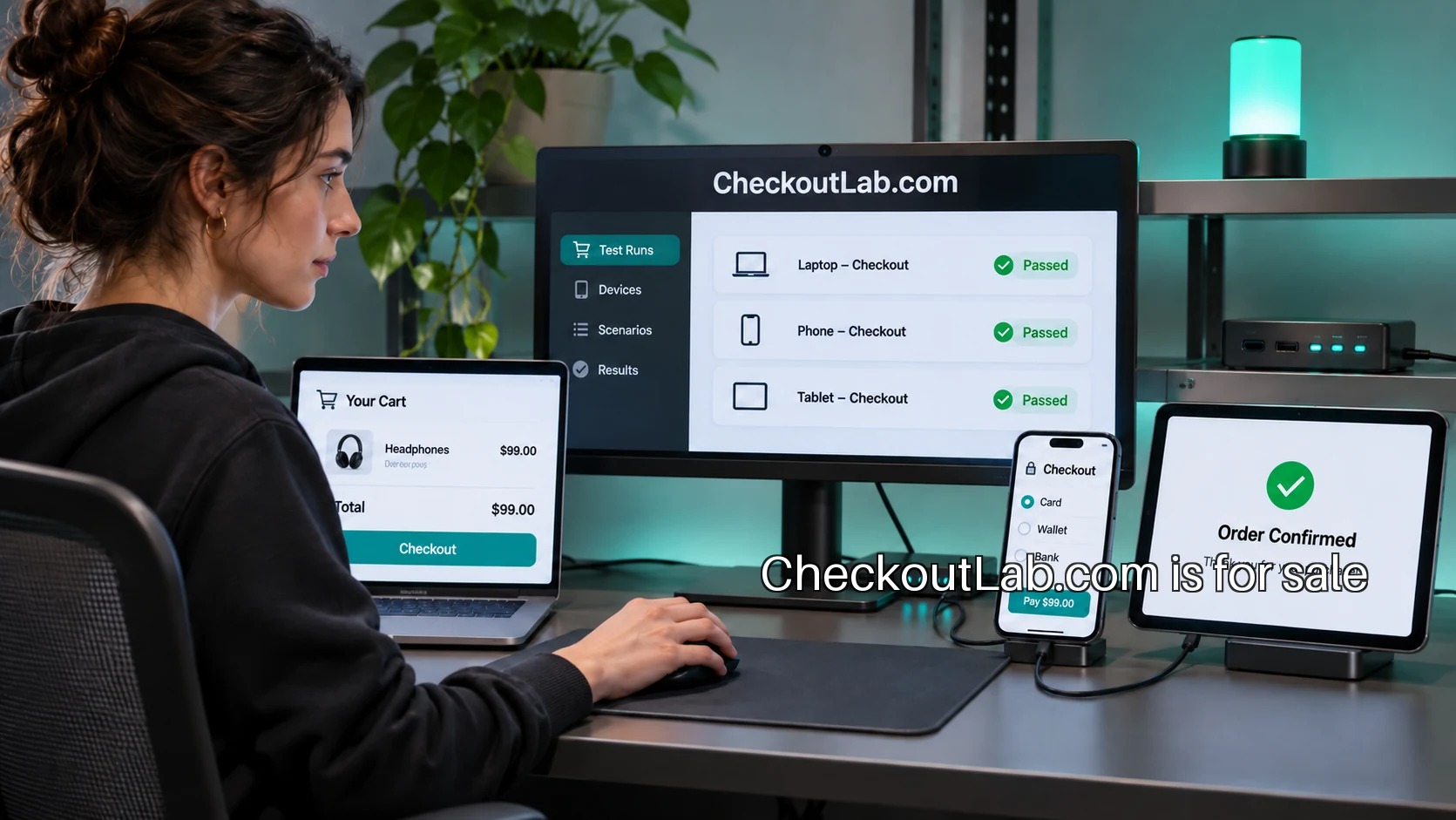
A merchant changes a delivery rule, installs an app or updates a theme. The storefront still looks right, but someone needs to check the path from the cart to a completed order. A product built around that recurring job could give a small commerce team a consistent record of what was tested and what needs attention. CheckoutLab.com fits a founder building that kind of practical testing business: checkout supplies the subject, and lab supplies the habit of testing it carefully.
The first customer would be a merchant team with a recognizable release routine and too little time to repeat every important check by hand. An agency maintaining several stores could be another buyer, but it is worth choosing one audience first. A single-store product and an agency reporting tool have different account structures, permissions and support needs. Starting with a clear buyer makes the first release easier to describe and the first report easier to design.
Choose a small, repeatable promise
A useful first offer could be a scheduled check of a defined set of purchase journeys on one supported commerce platform. The customer selects the scenarios, supplies approved test access and receives a report after each run. The report shows the expected result, the observed result and the step that stopped the journey. That is a concrete job the founder can demonstrate with a short sample rather than a broad promise about increasing sales.
The scope should be visible before a run starts. A product might cover guest purchases of ordinary physical goods and leave subscriptions or complex business purchasing for a later release. It could support a staging store first, where the team controls test products and payment settings. The customer should be able to see the exact supported conditions in the product, so a green result has an understandable meaning.
Shopify's test-order guidance provides a starting point for platform-specific planning: a test order can check settings across the checkout and order workflow. The product founder would turn the chosen platform's documented behavior into explicit scenarios. Documentation is the baseline; the value of the product lies in preparing the run, recording evidence and helping the team act on the result.
Make the report useful to the person fixing it
Imagine an illustrative merchant selling a mug in two sizes. The test suite adds the larger version, enters an approved address and chooses standard delivery. A newly edited rule leaves that address with no delivery option. The useful result is a report showing the cart contents, address fixture, selected route and screen where the option disappeared. An email saying “checkout failed” leaves too much work for the person investigating.
Reports should separate application behavior from test infrastructure. A browser that could not start is a different event from a form that rejected a valid address. A timed-out run should retain its last successful step and mark the outcome unresolved. That distinction gives the customer a sensible choice between retrying the run and investigating the store. It also makes support conversations shorter because both sides can inspect the same evidence.
Stripe's testing documentation illustrates another important distinction: test environments provide values for exercising different payment outcomes. A testing product can organize those outcomes into scenarios while keeping test data separate from live payment activity. The first release should explain which environment it uses and which outcomes it exercises, with a visible record of the configuration behind each run.
Distribution through a working artifact
A credible route to early customers is a sample report built around a store the founder controls. Publish the scenario definition, show the observed failure and demonstrate the corrected rerun. The artifact gives merchant teams something concrete to evaluate. A short walkthrough aimed at a specific platform community can then lead to a conversation about that team's release process.
Agency relationships could follow once the reporting model works. An agency needs consistent account separation, report sharing and a way to assign follow-up work. Those are product decisions, not just a different pricing page. A founder could interview a few agencies about how they currently record checkout checks, then build the smallest report that fits an existing handoff between developer and account manager.
The operational work behind the screen
Reliable scheduling, browser maintenance and safe handling of test credentials would be central to this business. So would support for platform changes. A founder would need a versioned scenario library, a clear process for updating it and a way to tell customers when a previous result no longer describes the current configuration. The product becomes more useful when its own changes are as traceable as the store changes it examines.
The first milestone could be one merchant using the report during a real release review. Watch whether the report answers the questions the team asks, whether a developer can reproduce the issue and whether the next run verifies the repair. Those observations would guide the second release better than adding a long list of integrations immediately. CheckoutLab.com gives that focused product room to grow into a broader testing practice under one identity.
To discuss acquiring the domain, use the inquiry form and describe the platform, merchant audience and first testing job you have in mind. PremiumBrands.com can discuss a purchase or partnership around the name.